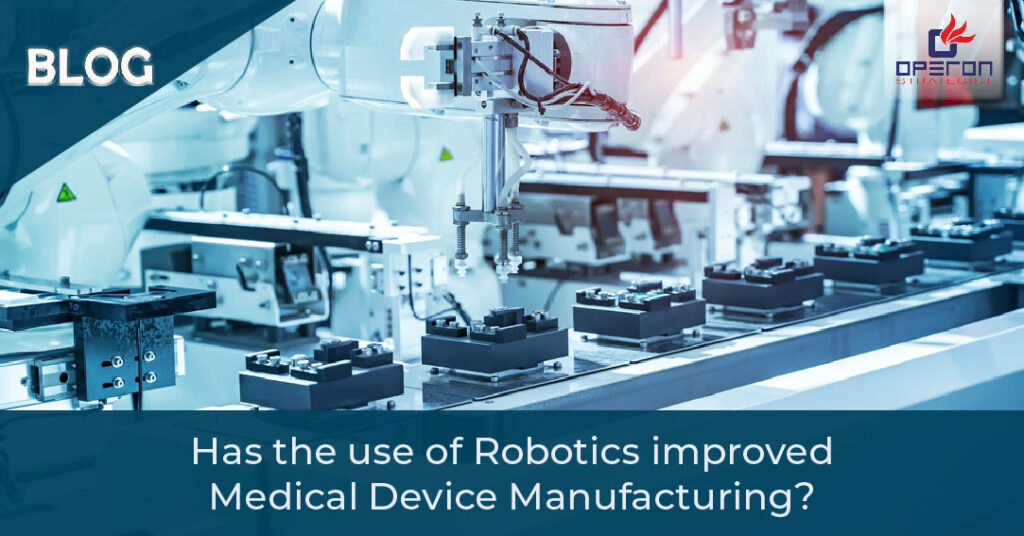
In recent years, robotics in medical device manufacturing has transformed how the industry approaches precision, scalability, and compliance. As technology continues to evolve, manufacturers in the USA are increasingly integrating robotics to stay competitive, enhance product quality, and streamline regulatory compliance. But has robotics truly improved medical device manufacturing? Let’s explore how automation and robotics are reshaping the landscape—and what it means for manufacturers, startups, and regulatory consultants.
Why Robotics is a Game-Changer in Medical Device Manufacturing
The medical device industry operates in a high-stakes environment where precision, consistency, and compliance are non-negotiable. Robotics offers a level of repeatability and accuracy that is difficult to achieve through traditional manual processes. Whether it’s assembling delicate components, packaging sterile instruments, or inspecting finished products, robotics ensures high-quality results with reduced variability.
Key advantages of robotics in medical device manufacturing include:
- Enhanced precision and reliability
- Reduced human error
- Increased production speed
- Improved workplace safety
- Greater compliance with regulatory standards
These advantages make robotics an invaluable asset, particularly for companies seeking to meet the stringent requirements of FDA, ISO 13485, or EU MDR regulations.
Robotics and Regulatory Compliance: A Stronger Alliance
Regulatory compliance is a core challenge in medical device manufacturing, especially in the USA where the FDA 21 CFR Part 820 quality system regulation governs design, manufacturing, and documentation. Robotics not only improves operational efficiency but also helps manufacturers meet these regulatory expectations more effectively.
For example:
- Data Logging and Traceability: Robotic systems can automatically log data during the manufacturing process, ensuring complete traceability—a critical requirement for audits and inspections.
- Validation and Repeatability: Robots ensure process consistency, aiding in process validation, a requirement under FDA and ISO standards.
- Sterility and Contamination Control: Automated systems reduce human contact with sterile components, minimizing contamination risks and ensuring product safety.
Companies that leverage Medical Device Regulatory Consulting services alongside robotic implementation often achieve smoother approvals and fewer compliance issues during audits.
Real-World Applications of Robotics in Medical Device Manufacturing
Let’s look at where and how robotics is being used across the manufacturing lifecycle of medical devices:
1. Assembly Automation
Robots are ideal for assembling complex and miniature components like catheters, surgical instruments, and implants. With their high precision, they reduce part damage and increase yield rates.
2. Material Handling and Packaging
In cleanroom environments, robots handle materials and packaging with minimal contamination risk. Automated packaging also ensures accurate labeling and batch coding, critical for traceability and recalls.
3. Quality Inspection
Vision-guided robotic systems can detect minute defects and irregularities that the human eye might miss. This enhances product quality and reduces rejection rates.
4. Additive Manufacturing (3D Printing) Integration
Robotics works in tandem with 3D printing for custom device creation, especially in prototyping and personalized medical solutions like dental implants or prosthetics.
5. Turnkey Project Management
Many US-based manufacturers are adopting turnkey project management approaches, integrating robotics from the early stages of product development to final production. This reduces go-to-market time and ensures better control over quality and regulatory timelines.
Robotics in Startups and Small-Scale Medical Device Companies
Traditionally, the high cost of robotic systems kept them out of reach for startups and small manufacturers. But today, with scalable and modular automation solutions, even early-stage companies can implement robotics in a cost-effective way.
Paired with expert medical device regulatory consulting and turnkey solutions, startups can navigate both the technical and regulatory aspects of manufacturing with ease—saving time, money, and resources.
Challenges and Considerations in Robotic Integration
While the benefits are clear, integrating robotics into medical device manufacturing also presents challenges:
- Initial Capital Investment: Robotics involves upfront costs in equipment, integration, and training.
- Customization Needs: Medical devices often require custom production lines.
- Change Management: Shifting from manual to automated processes requires workforce training and process reengineering.
This is where partnering with experienced consultants and automation experts can make a significant difference. From feasibility studies to validation documentation, the right guidance ensures a smoother transition.
Future Outlook: AI and Smart Robotics in Medical Device Manufacturing
The future of robotics in medical device manufacturing lies in the integration of Artificial Intelligence (AI) and machine learning. Smart robots can learn from data, adapt to real-time changes, and make decisions to optimize the production process further.
Additionally, cloud-based monitoring systems and the Industrial Internet of Things (IIoT) are allowing real-time visibility into every stage of manufacturing—from raw material tracking to final shipment.
This not only enhances quality but also simplifies regulatory submissions and post-market surveillance, especially under the FDA’s evolving requirements.
Curious About How Robotics Can Benefit Your Facility?
How Operon Strategist Can Help
If you’re a medical device manufacturer in the USA looking to integrate robotics into your production line, Operon Strategist offers end-to-end support through:
- Turnkey project management
- Medical Device Regulatory Consulting
- Facility design & cleanroom setup
- Design control and documentation support
- Process validation and quality system implementation
We help startups and established manufacturers alike align their automation strategies with regulatory goals—ensuring faster approvals, better products, and higher ROI.
Ready to take the next step in modernizing your manufacturing process?
Contact Operon Strategist today for a customized consultation on robotics, turnkey project management, and regulatory compliance for medical devices.